
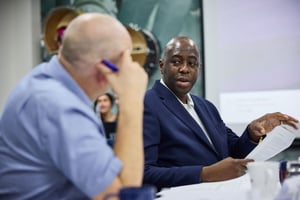
How King’s College London’s Faculty of Arts & Humanities strengthened programme delivery, relationships and change-readiness through Strengthify’s development journey.
Across universities, programme teams carry the weight of student experience, academic delivery, and institutional change. At King’s College London, those pressures have grown: rising expectations, evolving structures, and a shift toward functional workstreams. The Faculty of Arts & Humanities recognised that thriving through change would require not just new processes — but stronger relationships, shared understanding and a more confident, connected management community.
This is where the Strengthify journey began.
The Challenge: New Structures, High Demand, and the Human Side of Change
The Faculty's new functional structure - Programme Planning & Delivery, Assessment & Award, and Student Knowledge & Communication - created opportunities for better cross-team working. But it also introduced familiar pain points:
- Less-established relationships within the new groups
- Ambiguity around shared objectives
- Managers juggling both line and matrix responsibilities
- Sector pressures intensifying workload and wellbeing challenges
As Senior Programmes Manager Susan Westbrook explained, managers were doing their best - but needed a shared language, a stronger foundation of trust, and a practical way to lead change compassionately and confidently.
Susan had already experienced the Strengthify approach through a Discovery Workshop and the Management Development Programme (MDP). The impact stayed with her — especially during PDR season, where one team even trialled a “PDR coffee buddy” format to reflect on strengths and achievements before reviews.
She wanted the same benefits for her programme teams.
The Strengthify Journey: Discovery → MDP → Appreciative Inquiry
1. Discovery Workshops for All Managers
All Faculty managers first completed a Discovery session, building:
- Awareness of their strengths
- Appreciation of each other’s working styles
- A shared vocabulary for collaboration
These sessions created an early mindset shift - managers began thinking differently about themselves, their teams, and how they approach conversations.
2. Management Development Programme (MDP)
All managers then progressed to the MDP, where they deepened their understanding of:
- Strengths-based leadership
- Engagement-focused management
- Performance conversations grounded in confidence and humanity
The impact was strong - several managers reported using the tools immediately in one-to-ones, team meetings, and PDR discussions.
3. Appreciative Inquiry Workshops (Managers and Three Workstreams)
With foundations set, the next phase brought the functional programme teams together for a series of Appreciative Inquiry (AI) workshops.
Manager Session - Building Collective Direction
This session focused on:
- Strengths-based change management
- Cross-functional collaboration
- Exploring real-world challenges using AI tools
- Reframing problems through successes and what already works
Feedback was overwhelmingly positive:
- 100% would recommend the workshop
- Managers described the session as “uplifting”, “refreshing”, and “engaging”
One participant said:
“It provides a more positive feeling about change and new practice.”
Another reflected:
“The chance to work with others to reflect on current and future practice was incredibly useful.”
Even those less naturally drawn to reflective sessions valued the opportunity to connect with colleagues and share honest perspectives.
Workstream Sessions - Turning Insight into Action
Each functional group then explored practical challenges using AI methods. Themes included:
- Improving collaboration across roles and levels
- Strengthening communication and shared understanding
- Reimagining the Student Handbook (a key operational tool)
- Identifying “ideal world” solutions and translating them into realistic actions
Participants described these sessions as:
- “Positive, interactive and energising”
- “A great way to get to know each other more deeply”
- “Rich discussions that surfaced ideas we’ve never reached before”
- “Useful, insightful and directly applicable to our work”
The mix of future-focused reflection, creativity, and structured problem-solving helped teams generate clarity and direction.
Workshop Impact: A Shift in Confidence, Connection, and Collective Ownership
Clearer understanding of one another
Managers and officers alike reported greater empathy, appreciation of differences, and confidence in how to collaborate across both line and matrix structures.
Momentum and engagement
Several participants remarked that these sessions achieved more progress and energy in one day than previous meetings or reviews.
One commented:
“Today was incredibly useful - more progress than we’ve made in ages.”
Strengths in everyday conversations
The approach is already shaping team culture. Examples include:
- Strengths used in PDR preparation
- Managers integrating blind spots into development planning
- Teams using strengths language when distributing tasks
- Renewed enthusiasm for cross-team problem-solving
New ideas for improving operational challenges
The Appreciative Inquiry method helped teams uncover what already works and use it to drive change - particularly around communication, documentation and student-facing processes.
Greater readiness for future transformation
With sector-wide shifts on the horizon, Susan wanted teams who could adapt with confidence. The workshops helped build:
- Psychological safety
- Mutual trust
- Practical tools for navigating ambiguity
Or as one Programme Manager noted:
“A positive workshop that galvanised us to look at each other’s strengths and understand how we can work more effectively as a team.”
What’s Next? A Stronger Foundation for Programme Teams Across King’s College London
The Faculty now has a more cohesive, connected management community - with a shared mindset and toolkit for leading change.
Following the success of these workshops:
- Workstreams are embedding the ideas into weekly routines
- Leaders are exploring how strengths and AI can shape future development conversations and operational improvements
This strengths-based approach continues to build resilience, unity and clarity - essential qualities for programme teams navigating sector transformation.
Strengthen Collaboration and Change-Readiness in Your Programme Teams
If your programme teams are facing growing expectations, structural shifts or increasing operational pressure, we can help.
Strengthify’s programme of Discovery Workshops, Management Development Programme, and Appreciative Inquiry sessions give teams the confidence, language and tools needed to collaborate effectively through change.
- Explore our Programme Team Development Options
- Talk to us about your Programme Team needs for your faculty or institution